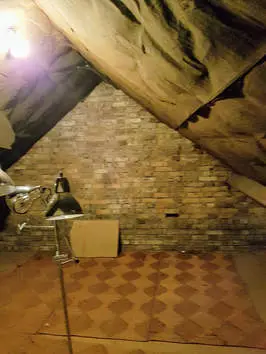
An attic refresh in Blockley — transforming an underused roof space into a bright, practical room.
An attic refresh improves an existing loft space without a full loft conversion — upgrading insulation, boarding, rooflight glazing, or internal finishes to make the space more usable, better insulated, and properly finished. It is a cost-effective way to improve a home's thermal performance and storage capacity without the scale or expense of a full loft conversion.
Blockley — Work in a Cotswold Village
Blockley is a village in the Cotswold district of Gloucestershire, north of Moreton-in-Marsh. Like many Cotswold villages, its housing stock includes older properties where attic spaces were built as storage or were left largely unimproved. The Blockley attic refresh was carried out to bring the existing roof space up to a usable standard — better insulated, better lit, and properly finished to serve as functional additional space for the household.
The project began with a review of what was already in place: existing insulation depth and specification, the condition of the roof structure, and the available headroom. In older properties it is common to find either no insulation, or early mineral wool that has settled, become damaged, or no longer meets current standards. Identifying what is there before deciding what to do is always the right starting point.
What an Attic Refresh Typically Involves
Depending on the existing condition of the attic, a refresh may include one or more of the following:
- Topping up or replacing loft insulation to the current recommended depth of 270mm
- Installing rigid insulation between and below rafters where the roof pitch allows it
- Boarding over joists at a raised level to preserve the insulation layer beneath
- Fitting or replacing rooflights (Velux-type windows) to improve natural light and ventilation
- Improving access — upgrading the hatch, fitting a loft ladder, or widening the opening
- Addressing any minor repairs to the roof structure identified during the inspection
At Blockley, the work focused on improving the insulation performance of the roof and bringing the internal finish up to a standard that makes the space genuinely practical. The result is an attic that contributes to the overall energy efficiency of the house rather than being a source of heat loss.
 1 / 4
1 / 4
Frequently Asked Questions
What is the difference between an attic refresh and a full loft conversion?
A full loft conversion changes the loft into a habitable room — typically a bedroom, bathroom, or office — requiring structural alterations, Building Regulations approval, and often planning permission. An attic refresh improves the existing space without changing its fundamental character: better insulation, boarding, rooflights, or finishing. It is faster, less expensive, and usually does not require planning permission or Building Regulations approval, depending on the scope.
How much insulation does a loft need to meet current standards?
The current recommended depth for mineral wool insulation laid between and across the loft joists is 270mm. Many older properties have far less than this — sometimes as little as 100mm of settled, older material. Topping up to 270mm is one of the most cost-effective energy improvements available to a homeowner, with payback periods typically measured in a few years.
Can I add a rooflight (Velux window) to my loft without planning permission?
In most cases, fitting a rooflight that does not project more than 150mm above the roof plane falls under permitted development and does not require planning permission. If the property is listed, in a conservation area, or if the window would face a highway, planning permission is required. Building Regulations approval is not required for a simple rooflight replacement or addition, though the installer should confirm this for your specific situation.
What is the best way to board a loft without compromising insulation?
Standard loft boards laid directly on joists compress the insulation beneath them, reducing its effectiveness. The correct approach is to use raised loft legs or a purpose-made raised boarding system that lifts the boards above the insulation level, allowing the full depth of insulation to do its job. This is a simple and inexpensive detail that makes a significant difference to the thermal performance of the attic.
Does P&R Mueller cover attic and loft work in the Cotswolds?
Yes — P&R Mueller has carried out attic, loft, and roof-related work in the Cotswold district of Gloucestershire, including in Blockley. We work across Worcestershire, Warwickshire, and Gloucestershire and are familiar with the building types typical of the Cotswolds area. Where permission is required, we carry out the building work from approved drawings and can work alongside your architect or planning consultant.
Thinking about a similar project?
We'd love to hear about your build. Get in touch for a free, no-obligation conversation.
Get in Touch